EdX

Calculus Applied! (edX)

Calculus Applied! (edX)

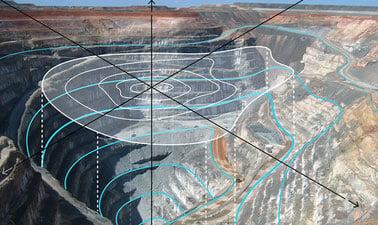
Apply tools of single-variable calculus to create and analyze mathematical models used by real practitioners in social, life, and physical sciences. In this course, we go beyond the calculus textbook, working with practitioners in social, life and physical sciences to understand how calculus and mathematical models play a role in their work.

Class Deals by MOOC List - Click here and see EdX's Active Discounts, Deals, and Promo Codes.

Through a series of case studies, you’ll learn:

  • How standardized test makers use functions to analyze the difficulty of test questions;
  • How economists model interaction of price and demand using rates of change, in a historical case of subway ridership;
  • How an x-ray is different from a CT-scan, and what this has to do with integrals;
  • How biologists use differential equation models to predict when populations will experience dramatic changes, such as extinction or outbreaks;
  • How the Lotka-Volterra predator-prey model was created to answer a biological puzzle;
  • How statisticians use functions to model data, like income distributions, and how integrals measure chance;
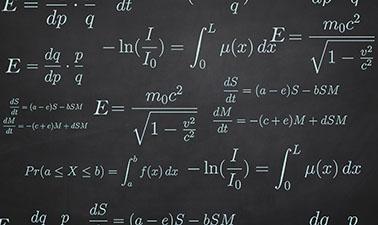
  • How Einstein’s Energy Equation, E=mc2 is an approximation to a more complicated equation.

With real practitioners as your guide, you’ll explore these situations in a hands-on way: looking at data and graphs, writing equations, doing calculus computations, and making educated guesses and predictions.
This course provides a unique supplement to a course in single-variable calculus. Key topics include application of derivatives, integrals and differential equations, mathematical models and parameters.
This course is for anyone who has completed or is currently taking a single-variable calculus course (differential and integral), at the high school (AP or IB) or college/university level. You will need to be familiar with the basics of derivatives, integrals, and differential equations, as well as functions involving polynomials, exponentials, and logarithms.
This is a course to learn applications of calculus to other fields, and NOT a course to learn the basics of calculus. Whether you’re a student who has just finished an introductory Calculus course or a teacher looking for more authentic examples for your classroom, there is something for you to learn here, and we hope you’ll join us!

What you'll learn

  • Authentic examples and case studies of how calculus is applied to problems in other fields
  • How to analyze mathematical models, including variables, constants, and parameters
  • Appreciation for the assumptions and complications that go into modeling real world situations with mathematics

Go to Class
MOOC List is learner-supported. When you buy through links on our site, we may earn an affiliate commission.

Related Courses

Introducción a las ecuaciones diferenciales (edX) EdX
Galileo University,GalileoX

Introducción a las ecuaciones diferenciales (edX)

Aprende el lenguaje de las ecuaciones diferenciales ordinarias y su aplicación en la modelación de muchos de los fenómenos que nos rodean. Este curso en línea se centra en el estudio de las ecuaciones diferenciales ordinarias (EDOs) de primer orden y consta de una introducción a la terminología y teoría, haciendo especial énfasis en la solución analítica de las mismas, sus propiedades y su aplicación en el modelado y resolución de problemas en física e ingeniería, entre otros.

Self Paced
Self-Paced
Advanced Bayesian Statistics Using R (edX) EdX
University of Canterbury,UCx

Advanced Bayesian Statistics Using R (edX)

Now that you know the basics of Bayesian inference, dive deeper to explore its richness and flexibility more fully. Let’s take a closer look at modeling latent variables, Bayesian model averaging, generalised linear models, and MCMC methods. Advanced Bayesian Data Analysis Using R is part two of the Bayesian Data Analysis in R professional certificate.

Self Paced
Self-Paced
Aplicaciones de la Teoría de Grafos a la vida real (I) (edX) EdX
Universitat Politècnica de València,UPValenciaX

Aplicaciones de la Teoría de Grafos a la vida real (I) (edX)

Aprenderemos a modelizar problemas del mundo real mediante su representación con grafos y a resolverlos mediante sus algoritmos asociados. Este curso trata la Teoría de Grafos desde el punto de vista de la modelización, lo que nos permitirá con posterioridad resolver muchos problemas de diversa índole. Presentaremos ejemplos de los distintos problemas en un contexto real, analizaremos la representación de éstos mediante grafos y veremos los algoritmos necesarios para resolverlos.

Self Paced
Self-Paced
Probability and Statistics I: A Gentle Introduction to Probability (edX) EdX
Georgia Institute of Technology,GTx

Probability and Statistics I: A Gentle Introduction to Probability (edX)

This course provides an introduction to basic probability concepts. Our emphasis is on applications in science and engineering, with the goal of enhancing modeling and analysis skills for a variety of real-world problems. In order to make the course completely self-contained (and to bring back long-lost memories), we’ll start off with Bootcamp lessons to review concepts from set theory and calculus.

Self Paced
Self-Paced
Advanced Linear Algebra: Foundations to Frontiers (edX) EdX
University of Texas at Austin,UTAustinX

Advanced Linear Algebra: Foundations to Frontiers (edX)

Learn advanced linear algebra for computing. Linear algebra is one of the fundamental tools for computational and data scientists. In Advanced Linear Algebra: Foundations to Frontiers (ALAFF), you will build your knowledge, understanding, and skills in linear algebra, practical algorithms for matrix computations, and the analysis of the effects of floating-point arithmetic as performed by computers.

Self Paced
Self-Paced
Observation Theory: Estimating the Unknown (edX) EdX
Delft University of Technology,DelftX

Observation Theory: Estimating the Unknown (edX)

Learn how to estimate parameters from observational data for real-world engineering applications and assess the quality of the results. Are you an engineer, scientist or technician? Are you dealing with measurements or big data, but are you unsure about how to proceed? This is the course that teaches you how to find the best estimates of the unknown parameters from noisy observations. You will also learn how to assess the quality of your results.

Self Paced
Self-Paced
MathTrackX: Special Functions (edX) EdX
University of Adelaide,AdelaideX

MathTrackX: Special Functions (edX)

Understand trigonometric, exponential and logarithmic functions and how they can be applied in the real world. This course is part two of the MathTrackX XSeries Program which has been designed to provide you with a solid foundation in mathematical fundamentals and how they can be applied in the real world.

Self Paced
Self-Paced
MathTrackX: Differential Calculus (edX) EdX
University of Adelaide,AdelaideX

MathTrackX: Differential Calculus (edX)

Discover concepts and techniques relating to differentiation and how they can be applied to solve real world problems. This course will cover basic concepts and techniques relating to differentiation; a fundamental tool of calculus. Derivatives are key to the understanding of rates of change, that is the extent to which a function responds to changes in a dependent variable.

Self Paced
Self-Paced
A-Level Further Mathematics for Year 12 - Course 2: 3 x 3 Matrices, Mathematical Induction, Calculus Methods and Applications, Maclaurin Series, Complex Numbers and Polar Coordinates (edX) EdX
Imperial College London,ImperialX

A-Level Further Mathematics for Year 12 - Course 2: 3 x 3 Matrices, Mathematical Induction, Calculus Methods and Applications, Maclaurin Series, Complex Numbers and Polar Coordinates (edX)

Develop your thinking skills, fluency and confidence in A-level further maths and prepare for undergraduate STEM degrees. This course by Imperial College London is designed to help you develop the skills you need to succeed in your A-level further maths exams. You will investigate key topic areas to gain a deeper understanding of the skills and techniques that you can apply throughout your A-level study.

Self Paced
Self-Paced